When the Music Matters More Than the Applause
What a night of jazz taught me about leadership, legacy, and making room for others.
Last Thursday evening, I found myself in a little jazz club near the University of Texas at Arlington.
I was wearing my Jordans, enjoying a watermelon cider, and listening to some remarkably talented college musicians.
I went for the music.
I left thinking about leadership.
And the most meaningful part of the evening happened after almost everyone else had gone home.
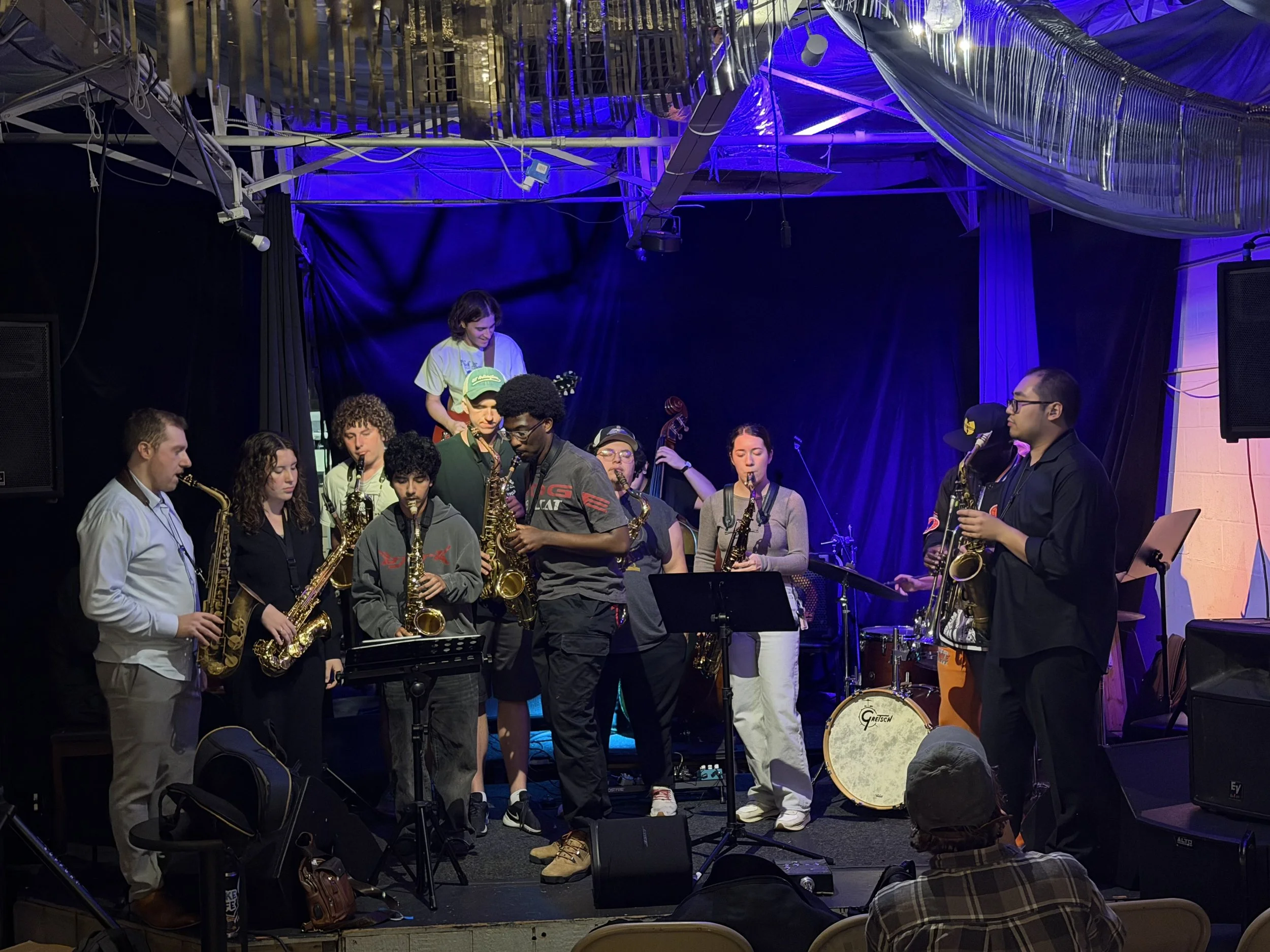
The Best Part Came After the Crowd Left
Earlier in the evening, there were probably fifty or sixty people in the audience. But as the night wore on, people began leaving.
By the final song, I think there were four of us left.
I almost felt sorry for the musicians.
But something interesting happened.
As the audience got smaller, the group onstage got larger.
More saxophonists joined the ensemble. Some were older graduate students, clearly experienced and comfortable. Others appeared to be freshmen, young musicians who seemed a little nervous about stepping onto the stage.
And what a stage it was. Small, crowded, and hardly the kind of place you would expect to witness an extraordinary leadership lesson.
But that's exactly what happened.
For approximately twelve minutes, I watched these musicians improvise together.
One musician was clearly guiding the group. He moved around the stage, pointing to different players, counting time with his hands, and mouthing instructions.
There were no lengthy explanations. No stopping the song to correct someone. No visible struggle for control.
The musicians simply watched, listened, responded, and kept playing.
And the music was beautiful.
But here's what stayed with me.
The experienced musicians weren't simply allowing the younger musicians to participate. They were making music with them.
Making Room Is Different from Stepping Aside
I've spent more than three decades in ministry leadership, including twenty years helping plant and lead Mosaic Church in Arlington, Texas.
One of my deepest convictions when we planted Mosaic was that the church should be a place where people discovered gifts they didn't even know they possessed.
I wanted ordinary people to understand that God could use them in extraordinary ways.
That conviction shaped how we approached leadership.
Some of my mentors warned me that if I shared the preaching platform too frequently, we would struggle to grow into a large church.
They believed people needed to identify one primary voice, one recognizable leader.
And perhaps there was some practical wisdom in their concerns.
But I couldn't escape a different conviction.
If Jesus was supposed to be the hero of our church, why did I need to be the hero of every Sunday gathering?
So we made room.
We invited younger leaders to preach and teach. We recognized gifts in people who didn't possess the credentials others might have expected. We created opportunities for men and women whose perspectives and experiences helped our congregation encounter the Scriptures in meaningful ways.
I think of people like Melvin, whose lack of conventional academic credentials didn't diminish the gifts I believed God had given him.
And I think of so many others—Nathan, Brent, Joy, Sarah, Nikki, and more—who contributed to the life of our church in ways I could never have accomplished alone.
Some went on to pastor churches. Others became leaders in business and their communities. Many simply continued serving faithfully wherever God placed them.
Looking back, some of my greatest joys weren't the sermons I preached.
They were the moments when I watched someone else discover that God could use their voice.
That's what I recognized in those older jazz musicians.
They weren't surrendering their commitment to excellence by making room for the freshmen.
They were demonstrating a different kind of excellence.
They understood that helping another musician grow was part of making great music.
The Courage to Risk an Imperfect Performance
Of course, inviting younger musicians onto the stage involves risk.
Someone might miss a note.
Someone might lose the rhythm.
Someone might not know what to do when it's their turn.
The same is true in leadership.
When we give someone their first opportunity to lead a meeting, teach a class, preach a sermon, or manage a project, things may not go as smoothly as they would if we handled everything ourselves.
And that's where leaders face a choice.
Do we protect the performance?
Or do we develop the people?
Actually, I think the jazz musicians showed me that this is the wrong question.
Healthy leadership does both.
There was still someone guiding the music. There were still standards. There was still a shared understanding of rhythm and direction.
But within that structure, people had room to contribute.
Great leaders don't eliminate every possibility of failure. They create environments where people can grow without losing sight of the mission.
That requires confidence.
It requires patience.
And sometimes it requires us to value someone else's development more than our own moment in the spotlight.
The Music Was Never About the Audience
Something else happened that evening that I haven't been able to stop thinking about.
Those musicians played with tremendous energy even though almost nobody was listening.
By the time the final song began, there were more musicians onstage than people in the audience.
Yet they played as though the room were full.
They laughed. They encouraged one another. They took turns improvising. They seemed genuinely delighted to be creating something together.
I can't know what every musician was thinking, but watching them, I had the distinct impression that their joy wasn't dependent on applause.
They loved the music.
And I found myself wondering how much healthier our organizations, churches, and families might become if we approached our responsibilities with that same perspective.
What happens when the purpose matters more than the recognition?
What happens when developing people matters more than being indispensable?
What happens when we're willing to give our best even when the audience is small?
Those questions have become more personal to me as I've grown older.
At 57, I can look back over decades of ministry and see things I would do differently. I can recognize places where I lacked maturity, where our systems needed strengthening, and where I still had much to learn about shepherding people.
I can also look back with gratitude.
Mosaic never became the large church some imagined it could become.
But I don't regret making room for other voices.
I believe people discovered gifts, found opportunities to serve, and experienced the kingdom of God in ways that might never have happened otherwise.
And along the way, God was doing something in me, too.
He was teaching me that the size of the audience was never supposed to be the measure of the music.
Leadership Is About What We Give Away
Paul wrote to Timothy:
"And what you have heard from me in the presence of many witnesses entrust to faithful men, who will be able to teach others also." — 2 Timothy 2:2 (ESV)
I love the multiplication in that verse.
Paul wasn't simply concerned with what Timothy knew.
He wanted Timothy to entrust what he'd learned to others, who would then be equipped to teach still others.
That's a beautiful picture of spiritual leadership.
We receive something.
We steward it.
And then we give it away.
Not carelessly. Not without discernment. Not because everyone is ready for every responsibility.
But because the mission is bigger than any one of us.
And because the people God places around us may have gifts we haven't yet learned to recognize.
One of the most important questions a leader can ask is not simply, "How can I do this better?"
It's also, "Who could become better if I made room for them?"
One Last Song
I've thought about that final jazz performance several times since Thursday night.
I can still picture those younger musicians stepping onto the crowded stage.
I can still see the leader moving from player to player, guiding the ensemble with subtle gestures.
And I can still remember the joy on their faces as they played for a room that was nearly empty.
I went to hear music.
But I left remembering people.
People making room for one another.
People trusting one another.
People discovering what they could create together.
And perhaps that's one of the greatest gifts a leader can give.
Not merely the opportunity to watch someone excellent perform.
But the invitation to join the music.
Because the music is the hero, not any one player.
And when the music matters more than the applause, there's room for a lot more people on the stage.
